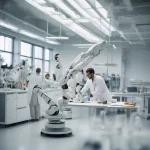
In a world where illness arrives unannounced, technology trends in healthcare bring hope back. A quiet revolution refocuses recovery — technology trends in healthcare. These are not mere conveniences or upgrades; they are life-changing innovations, born from empathy and driven by purpose. From AI-assisted diagnostics to personalized medicine, we are witnessing the dawn of an era where healing is faster, smarter, and more human than ever before.
Related: new technology in medicine and trending technologies.
Imagine a future where a rural child can receive the same level of care as someone in a world-class city hospital. Where doctors can detect disease before symptoms even appear. Where surgeries are performed with robotic precision, and treatment plans are tailored to the unique biology of each individual. This is not fiction. These are technology trends in healthcare that are already changing lives — one breakthrough at a time.
Technology Trends in Healthcare: Pulse of Possibility
For decades, the healthcare industry struggled under the weight of manual processes, fragmented systems, and limited access. But today, technology trends in healthcare are flipping the script. Telemedicine is no longer a stopgap — it’s a lifeline. Wearable health monitors are turning everyday people into empowered participants in their own care. Data analytics are helping doctors make quicker, more accurate decisions, saving precious time in critical moments.
And yet, this transformation is about more than tools. It’s about values. Empathy. Equity. Efficiency. These modern care platforms are designed to serve not just systems, but souls. They are reducing gaps in access, breaking down barriers, and bringing healing where once there was delay or despair.
The Power of Preventive Intelligence
One of the most heartening developments within technology trends in healthcare is the rise of predictive and preventive care. Artificial intelligence (AI) and machine learning are now being deployed to analyze vast volumes of patient data — not to react to illness, but to prevent it. Algorithms can now flag early warning signs of chronic diseases such as diabetes, heart failure, and even certain cancers long before they fully develop.
This isn’t just about saving costs — it’s about saving lives. These advances bring early interventions, customized alerts, and proactive treatments into everyday care. In doing so, modern care models are shifting the paradigm from treatment to prevention, from passive care to active wellness.
Telemedicine: Care Without Borders
In times of global crises or everyday busyness, getting to a clinic isn’t always possible. But now, with robust telehealth platforms, quality medical care can reach into the most remote corners of the world. With just a smartphone and a connection, patients can consult with specialists across oceans, receive prescriptions, and manage chronic conditions — all from the safety of home.
What once felt like futuristic luxury is now a staple in modern medicine. These technology trends in healthcare have elevated telemedicine from an option to a necessity, ensuring continuity of care and opening up a universe of possibilities for underserved communities.
Personalized Medicine via Technology Trends in Healthcare
Not all bodies are the same — and finally, medicine is catching up. Among the most exciting technology trends in healthcare is the shift toward precision medicine, where treatment plans are no longer based on averages, but on individual genetic makeup, lifestyle, and environment. By harnessing tools like genomic sequencing, physicians can now craft highly targeted therapies that work with — not against — the patient’s unique biology.
This means fewer side effects, faster recovery, and better outcomes. It’s medicine that listens, adapts, and responds with deep personal insight — offering not just care, but dignity.
Robotics and Automation: Precision in Motion
In operating rooms around the world, robotic-assisted surgeries are transforming outcomes with astonishing precision. Surgeons now collaborate with intelligent machines that reduce human error and enable minimally invasive techniques. This results in shorter hospital stays, quicker recoveries, and less physical trauma for patients.
Meanwhile, automation behind the scenes — in pharmacies, billing, and logistics — is relieving healthcare professionals from tedious administrative burdens. These technology trends in healthcare are giving time back to the people who need it most: caregivers and patients alike.
Emotional AI: Listening to What’s Not Said
Mental health is just as critical as physical health, yet often harder to detect and address. Now, emotional AI systems are helping bridge this gap. Using voice analysis, facial recognition, and natural language processing, these tools can identify signs of depression, anxiety, or cognitive decline — sometimes before a patient even realizes it.
These compassionate smart assistants are designed not to replace therapists or doctors, but to enhance their understanding. They open doors to early intervention, better communication, and holistic healing.
Data-Driven Decisions: Smarter Every Day
Behind every innovation is a stream of data — and now, it’s being put to good use. From electronic health records to real-time dashboards, healthcare systems are becoming more transparent, more efficient, and more responsive. Physicians can access a patient’s full history with a few clicks. Public health officials can track outbreaks in real-time. Administrators can optimize staffing and resources with pinpoint accuracy.
In every corner of the industry, technology trends in healthcare are helping leaders make data-informed decisions that protect and uplift human lives.
A Call to Embrace Hope and Progress
We are living in a moment of remarkable possibility. The convergence of compassion and innovation is creating a healthcare ecosystem that is not only more advanced — but more humane. These technology trends in healthcare are redefining what healing means, not just for today, but for generations to come.
For patients, this is a call to empowerment. For practitioners, a call to evolve. For innovators, a call to keep dreaming. Because every life saved, every diagnosis improved, and every smile restored is a reminder that technology, at its best, is not cold or mechanical — it’s deeply, beautifully human. And this is only the beginning.
Adoption Checklist for Care Teams
Start with one delay that frustrates patients most, such as scheduling, results, or follow-ups. Name it, measure waits, and set a target.
Next, pilot a single digital fix with one clinic team for a month. Track wait times and satisfaction weekly before wider rollout.
Review outcomes openly with staff and patients. Guidance from HealthIT resources helps teams plan safe pilots and track quality.
- Name one painful delay first.
- Pilot one fix for a month.
- Track waits and satisfaction weekly.
- Review results openly.
- Train staff on new steps.
Keep patients at the center of every change. Tools should shorten waits while people deliver comfort.
What are technology trends in healthcare?
They are new tools reshaping care, from telemedicine to AI triage. They shorten waits, personalize treatment, and extend reach.
How do they help patients?
Remote visits, faster results, and tailored plans top the list. Patients spend less time waiting and more time healing.
What should clinics watch?
Privacy, training, and workflow fit matter most. Pilot small, measure weekly, and expand only proven wins.
About the Author